Sewer line problems like backups and leaks are serious and can cause extensive damage. Depending on the cause of the problem, some situations can be remediated with a repair, while others require replacement. Due to the higher costs associated with these remediations, homeowners should carefully consider the factors that may warrant a sewer line repair vs. replacement.
If you’re wondering whether to repair or replace your sewer line, the answer depends on the condition of the pipe, its material, how old it is, where the damage is, how extensive the problem is, and what your plans are for the house. In Metro Detroit, where a large number of homes were built in the 1940s through the 1960s, this conversation comes up regularly, and getting it right matters.
Here are a few things homeowners in the Metro Detroit area should consider before making this decision.
Start with the Sewer Line Pipe Material
The material of your sewer line pipe matters more than most homeowners realize. It determines how the pipe fails, how quickly it deteriorates, and what repair options are realistic.
Clay tile pipe was the standard material for residential sewer lines in the Detroit area from the early 1900s through roughly the 1960s. It is durable in terms of resisting chemical corrosion, but it is brittle, prone to cracking, and highly susceptible to root intrusion at the joints. A clay pipe in generally good condition can still be lined or repaired. But a clay pipe with widespread joint failure, significant root damage, or multiple cracks across a long section usually warrants replacement.
Cast iron pipe, used primarily in the interior of homes, corrodes from the inside over decades. The interior of an old cast iron drain line often has rough corrosion that reduces the pipe’s diameter and creates surfaces where debris clings. Cast iron with significant corrosion or multiple pinhole failures is generally a replacement candidate.
Orangeburg pipe, a compressed tar-fiber material used as a lower-cost option from the 1940s through the 1970s, was never meant to be permanent. It absorbs water, swells, deforms, and eventually collapses. If your home still has the Orangeburg sewer pipe, replacement is almost always the right decision, regardless of current symptoms.
PVC and ABS plastic pipe, which became standard from the 1970s onward, are more resistant to corrosion and roots. Damage to plastic pipe is more likely to be isolated, making targeted repairs more viable.
When Sewer Line Repair Makes More Sense
Sewer line repair is appropriate when the damage is localized and the pipe is otherwise in reasonable condition.
A single cracked joint, an offset section, or a root entry point at one location in an otherwise intact line can often be addressed without replacing the entire run. Pipe lining is one of the most useful repair options in this category. A flexible liner is pulled into the existing pipe and inflated against the walls, then cured in place to create a smooth, continuous inner surface. The original pipe effectively becomes the support structure for a new pipe inside it.
Pipe lining works well when the host pipe is cracked or has root entry points but has not collapsed. It does not require excavation in most cases, which keeps costs lower and avoids major disruption to the yard or basement floor. It adds meaningful life to an aging pipe and creates a root-resistant surface.
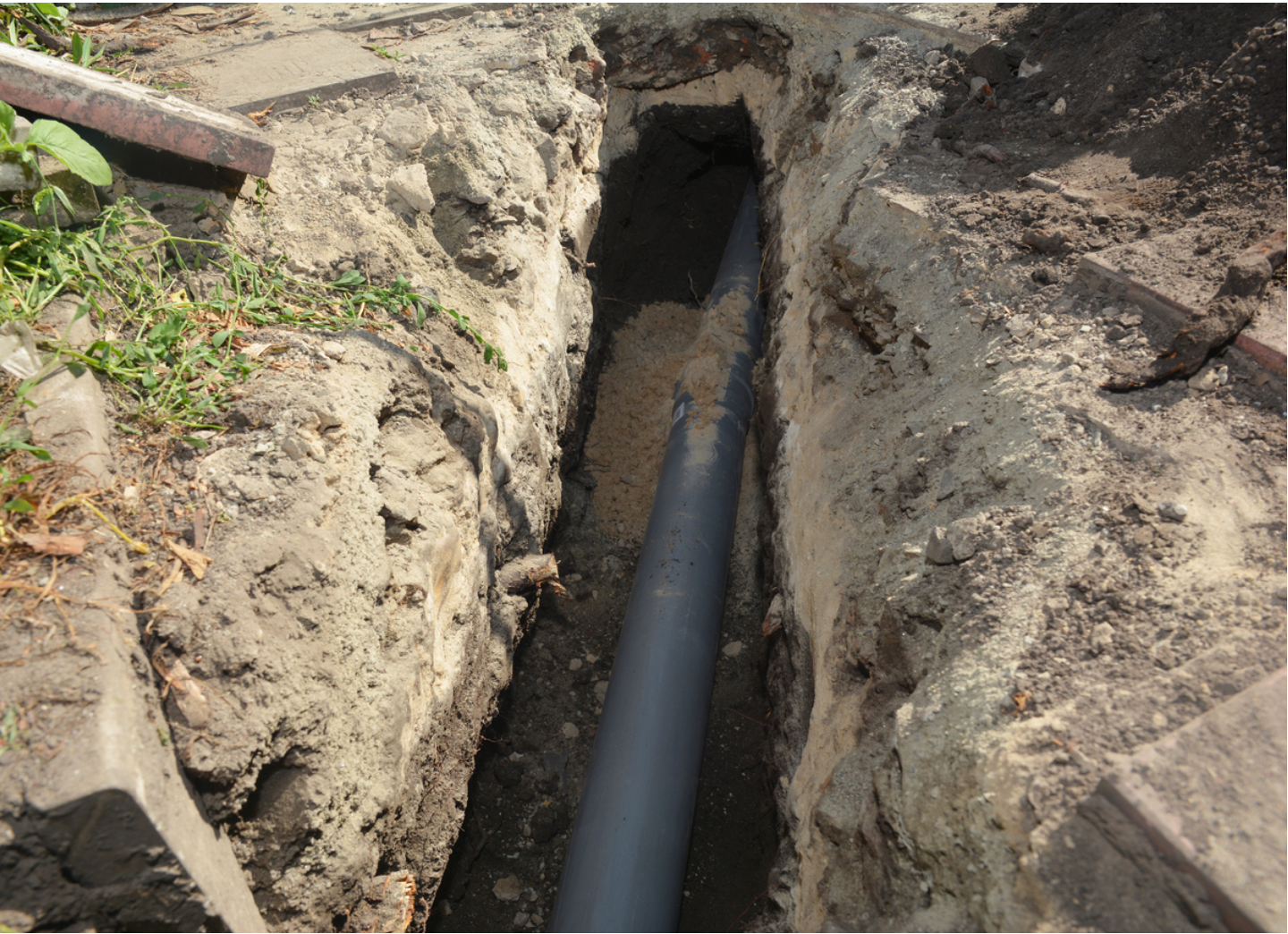
Spot repair is the other option for localized damage. A plumber digs down to the specific section that is damaged, cuts out and replaces that portion, and backfills the excavation. It is straightforward when the damage is shallow and access is reasonable.
When Sewer Line Replacement is Warranted
Full sewer line replacement makes sense when the damage is spread across a significant portion of the line, when the pipe material is fundamentally compromised, or when the pipe has already been repaired multiple times without lasting results.
A sewer camera inspection is a great tool that allows the plumber to see root intrusion, offset joints, and any collapsed sections that are not lining candidates. This allows you and your plumber to understand the extent of the damage and what remediation method makes more sense for your situation.
Homes in older Detroit-area neighborhoods that still have their original clay sewer lines sometimes reach a point where every season brings a new problem. A root clearing that needs to be repeated every 12 months, combined with ongoing backups and aging pipe material, often points toward replacement as the better long-term investment.
In some cases when repairs can cost just as much as a full replacement, getting a replacement is a no-brainer. For example, if a pipe is deteriorated to the point that there is not enough intact structure left to support a liner, spot repairs across that much length would cost nearly as much as replacement.
Replacement also makes sense when a homeowner is planning a significant renovation. If you are finishing a basement, adding a bathroom below grade, or making other changes that involve the floor or the drain system, addressing a deteriorated sewer line at the same time avoids tearing things up twice.
Trenchless vs. Traditional Excavation for Sewer Line Repair and Replacement
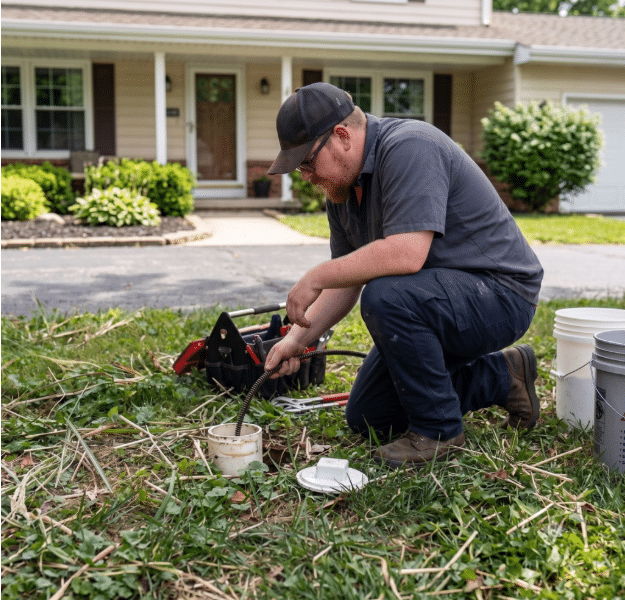
One of the concerns homeowners have when having to repair or replace their sewer line is the damage to their lawn or driveway from the excavation process. Trenchless methods use small holes or existing cleanouts to access the sewer line without extensive damage to the property. Both sewer line repair and replacement can be done with trenchless methods. Pipe lining can often be done trenchless for repairs, and pipe bursting is another method that allows trenchless pipe replacement.
Unfortunately, trenchless methods are not always possible. For trenchless sewer line repair or replacement to work, the line needs to have access points at each end, the surrounding soil conditions need to be appropriate, and the path of the pipe needs to be reasonably straight. In some Metro Detroit properties where the line makes multiple bends, passes through tight spaces, or is very deep, traditional excavation is more practical.
We assess whether a home is a good candidate for trenchless repairs based on the individual conditions. An experienced licensed plumber will be able to explain which method is recommended and the reasoning behind their recommendation. The cost difference between trenchless and traditional excavation has narrowed in recent years. Trenchless is not always cheaper, but it avoids the expense of restoring a yard or driveway that gets excavated in the process.
Questions to Answer Before Deciding Between Sewer Line Repair and Replacement
A few questions help homeowners reach the right decision:
- How old is the pipe and what is it made of? This frames the baseline expectation for its remaining life.
- How much of the line is compromised? A problem limited to one section is a different situation from damage spread across the majority of the run.
- Has this been repaired before? Repeated repairs to the same line suggest the underlying material has reached its limit.
- What are your plans for the house? A homeowner planning to sell in two years has a different calculation than one who plans to stay for 20.
You may already know the answer to some of these questions as a homeowner. But the only reliable way to know what kind of sewer line issue you are dealing with is a video camera inspection. It shows the pipe material, the nature and extent of the damage, and the locations where problems exist. That information will allow your plumber to accurately estimate the job and give you the peace of mind for knowing that you’re making the most educated decision for your repair.
Waterwork Plumbing is Metro Detroit’s Trusted Plumber for Over 20 Years
Waterwork Plumbing serves Metro Detroit homeowners with sewer line inspections, pipe lining, spot repairs, and full sewer line replacements. If you are facing a sewer line issue and want to understand your options clearly, visit waterworkplumbing.com or give us a call at (248) 542-8022.