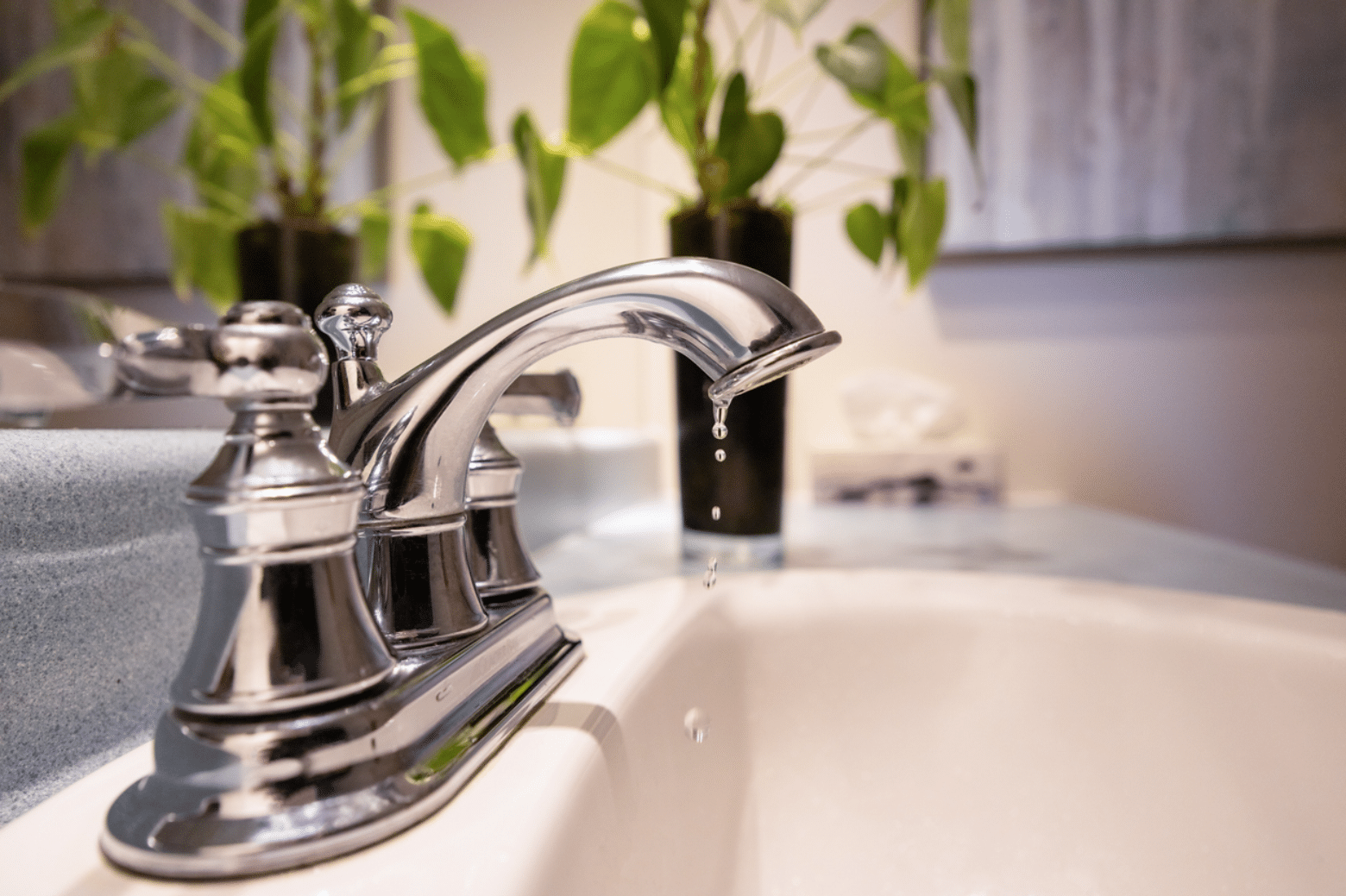
If you have ever been kept awake by the steady drip-drop of a leaky tap, you are not alone. Faucets drip in millions of homes across the country, and while a single drop might not seem like a big deal, those drops add up fast. The U.S. Environmental Protection Agency estimates that household leaks waste nearly one trillion gallons of water each year, and dripping faucets are one of the most common culprits. Understanding why faucets drip is the first step toward stopping the waste, lowering your water bill, and protecting your plumbing from bigger problems down the road.
How a Faucet Works (and Where Things Go Wrong)
Before we look at why faucets drip, it helps to know what is happening inside the handle. Most residential faucets fall into one of four categories: compression, ball, cartridge, and ceramic disc. Each design uses a slightly different mechanism to control water flow, but they all share the same basic idea. When you turn the handle or lift the lever, an internal component moves away from a seat or seal, allowing pressurized water to pass through. When you close the faucet, that component presses back against the seal to stop the flow.
When any part of this system wears down, water finds a way through. The result is a faucet that drips even when you are sure you turned it off all the way. The specific reason faucets drip depends on the faucet type and which internal part has failed, but the underlying principle is always the same: something is no longer creating a watertight seal.
The Most Common Reasons Faucets Drip
Worn-Out Washers and O-Rings
In compression-style faucets, a rubber washer presses against the valve seat every time you close the tap. Over months and years of use, that washer compresses, hardens, and eventually cracks. Once it loses its shape, it can no longer form a tight seal, and faucets drip as a result. O-rings, which sit around the valve stem, suffer the same fate. They dry out, become brittle, and let water seep past. Replacing a worn washer or O-ring is one of the most straightforward plumbing repairs, and it is often all that is needed to stop the drip.
Corroded Valve Seats
The valve seat is the connection point between the faucet and the spout. Over time, mineral deposits from hard water can build up on the seat, creating an uneven surface. When the washer or cartridge presses against a corroded seat, it cannot make full contact, and water slips through. If the valve seat is badly pitted, even a brand-new washer will not fix the problem. In these cases, the seat needs to be resurfaced or replaced.
Failing Cartridges and Ceramic Discs
Single-handle faucets typically use a cartridge or ceramic disc assembly to regulate water flow and temperature. These parts are durable, but they are not invincible. Sediment can score the surface of a ceramic disc, and the seals around a cartridge can shrink or crack over time. When this happens, faucets drip from the spout or leak around the base of the handle. Cartridge and disc replacements are a bit more involved than swapping a washer, but a qualified plumber can handle the job quickly.
High Water Pressure
Water pressure that is too high puts extra stress on every fitting and valve in your home. When pressure exceeds roughly 80 psi, faucets and other fixtures may not be able to hold back the flow completely. You might notice that faucets drip only at certain times of day, particularly when neighborhood demand is low and pressure spikes. A pressure-reducing valve installed at the main supply line can solve this problem and protect your entire plumbing system in the process.
Why Some Faucets Drip Only Sometimes
One of the more puzzling experiences is a faucet that drips for a while, stops on its own, and then starts up again hours later. Intermittent dripping usually comes down to fluctuations in water pressure. Municipal water systems adjust pressure throughout the day based on demand. During peak usage in the morning and evening, pressure may drop enough that a slightly worn seal can still hold. During off-peak hours, pressure rises, and that same seal lets water through.
Temperature changes also play a role. Metal and rubber components expand and contract as the water running through them shifts between hot and cold. A seal that holds just fine with cold water might lose its grip once hot water causes the surrounding metal to expand slightly. This is why faucets drip intermittently in homes where hot water usage varies throughout the day.
In some cases, intermittent dripping is a sign of a partially blocked aerator or debris caught inside the valve. Tiny bits of sediment or pipe scale can temporarily lodge against a seal, creating a gap, and then wash away when the water flow changes. If you notice your faucet dripping in an unpredictable pattern, it is worth having a plumber inspect the internals rather than waiting for the problem to become constant.
Why Faucets Seem to Drip More at Night
Many homeowners notice that their faucets drip more noticeably at night, and there is a real explanation behind it. Part of it is simply perception. During the day, ambient noise from appliances, traffic, conversations, and electronics masks the sound of a drip. At night, when the house is quiet, that same drip becomes impossible to ignore.
But perception is only part of the story. Water pressure in municipal systems tends to increase during the late evening and early morning hours because fewer people are running showers, washing machines, and sprinklers. That rise in pressure pushes harder against aging seals and worn washers. A faucet that barely drips during a busy weekday afternoon may produce a steady stream at two in the morning when the pressure in your pipes is at its highest.
Thermal contraction can contribute as well. As nighttime temperatures drop, especially in cooler months, the metal components in your faucet contract slightly. If a washer or cartridge seal is already marginal, that small dimensional change can be enough to open a gap. So when faucets drip more at night, it is usually a combination of higher pressure, cooler temperatures, and the simple fact that your ears have nothing else to focus on.
The Real Cost of a Dripping Faucet
A faucet that drips once per second wastes about 3,000 gallons of water per year. That is enough to fill a backyard swimming pool. Beyond the water bill, a persistent drip can stain sinks and fixtures, encourage mold growth in cabinets, and accelerate corrosion inside the faucet body itself. What starts as a minor annoyance can turn into a much more expensive repair if the valve seat erodes or the faucet body cracks from prolonged exposure to moisture.
Fixing a drip early almost always costs less than dealing with the consequences of ignoring it. In most cases, the repair involves replacing a washer, O-ring, cartridge, or ceramic disc, all of which are affordable parts. The labor is minimal for an experienced plumber, and the savings on your water bill will often cover the cost of the service call within a few months.
When to Call a Professional Plumber
Some drips are easy to diagnose and fix on your own, especially if you are comfortable taking apart a compression faucet to replace a washer. But if you have already tried tightening the handle or replacing visible parts and faucets drip regardless, it is time to call a professional. Persistent dripping after a DIY fix often points to a corroded valve seat, a cracked faucet body, or a pressure issue that requires specialized tools to diagnose.
At Waterwork Plumbing, we see dripping faucets every week, and we know that no two leaks are exactly alike. Our team will identify the root cause, recommend the most cost-effective repair, and make sure your faucet is sealed properly before we leave. If your faucets drip and you are ready to stop wasting water and money, give us a call or schedule a service appointment online. A small fix today can save you from a much bigger headache tomorrow.
Frequently Asked Questions About Dripping Faucets
Can a dripping faucet increase my water bill?
Yes. Even a slow drip can waste thousands of gallons per year, which shows up as a noticeable increase on your monthly water bill. The faster the drip, the higher the cost.
Is it normal for faucets to drip a little?
No. A properly functioning faucet should not drip at all when it is fully closed. If you see any water coming through, something inside the faucet needs attention.
How much does it cost to fix a dripping faucet?
Most dripping faucet repairs are affordable, typically involving a replacement washer, O-ring, or cartridge. The exact cost depends on the faucet type and whether the valve seat needs work. Contact Waterwork Plumbing for a free estimate.