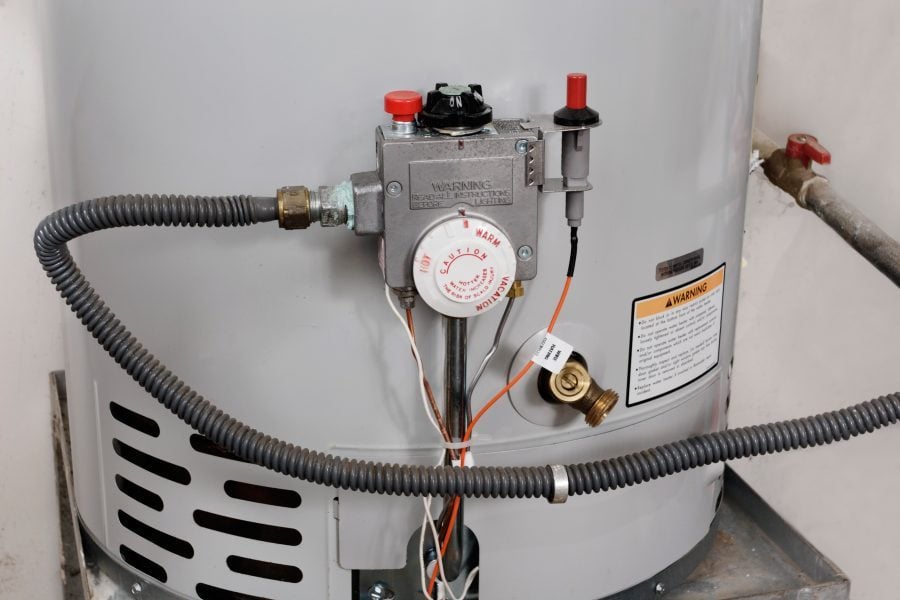
Replacing a water heater is one of those decisions most people only make a few times in their lives, so it is worth getting right. The biggest question is usually the same: should you stick with a traditional tank water heater or switch to a tankless model? Both heat your water reliably, but they work differently, cost differently, and suit different homes.
This guide breaks down how each type works, what they cost to buy and run, how long they last, and which one tends to be the better fit depending on your household. We also cover a few things that matter specifically for homes here in Metro Detroit.
How a Traditional Tank Water Heater Works
A tank water heater is the familiar cylinder sitting in a basement or utility closet. It stores a large volume of water, usually 40 to 80 gallons, and keeps it heated and ready to use. When you turn on a hot tap, heated water leaves the top of the tank and cold water flows in the bottom to be warmed for the next use.
Because the tank holds a reserve of hot water, it can deliver a strong flow to several fixtures at once. The trade-off is that it heats and reheats that stored water around the clock to keep it hot, even when no one is using it. That standby heating is where a lot of the energy goes.
How a Tankless Water Heater Works
A tankless water heater, sometimes called an on-demand water heater, skips the storage tank entirely. When you open a hot tap, cold water runs through the unit and a powerful gas burner or electric element heats it instantly as it passes through. When you close the tap, the heater shuts off.
Because it only heats water when you actually need it, a tankless unit avoids the standby energy loss of a tank. It also delivers an endless supply of hot water for as long as you need it, which is a real advantage for back-to-back showers. The limit is flow rate rather than volume: a tankless unit can only heat so many gallons per minute at once, so running several hot fixtures at the same time can strain a single unit.
Tank vs Tankless: The Key Comparisons
Here is how the two stack up on the factors that matter most.
| Factor | Tank water heater | Tankless water heater |
|---|---|---|
| Upfront unit cost | Roughly $500 to $1,000 | Roughly $1,000 to $3,000 |
| Typical installed cost | Lower | Higher, may need gas or venting upgrades |
| Energy use | Higher, from standby heating | Lower, heats only on demand |
| Hot water supply | Limited to tank size | Endless, but limited by flow rate |
| Lifespan | About 10 to 15 years | 20 years or more |
| Space needed | Large, takes floor space | Compact, mounts on a wall |
| Best for | Simultaneous high demand, lower upfront budget | Long-term savings, space savings, efficiency |
Cost
Tank water heaters win on upfront cost. The unit itself is cheaper and installation is usually simpler, so the day-one price is lower. Tankless units cost more to buy, and installation can add cost if your home needs a larger gas line or new venting to support one.
Where tankless earns its money back is over time. The U.S. Department of Energy notes that tankless units can be more energy efficient than tank models, and for homes that use a modest amount of hot water each day the efficiency gain is meaningful. Over a 20-year lifespan, the energy savings and longer life can offset the higher purchase price.
Energy Efficiency
Tankless is the more efficient choice for most homes. A tank heater reheats stored water throughout the day whether you use it or not, which wastes energy. A tankless unit only fires when you open a tap. Homes that use less hot water per day see the biggest percentage savings, since standby loss makes up a larger share of a low-use tank’s energy bill.
Lifespan
A tank water heater typically lasts 10 to 15 years. A tankless unit often lasts 20 years or more, and its parts are usually easier to service and replace. That longer life is part of the long-term value case for going tankless, though it depends on keeping up with maintenance.
Hot Water Supply
This is where the two differ most in daily life. A tank delivers a big burst of hot water and can feed several fixtures at once, but once the tank runs out you wait for it to reheat. A tankless unit never runs out, but it is limited by how many gallons per minute it can heat at one time. A large household running multiple showers and appliances together may need a higher-capacity unit or more than one.
Which Water Heater Is Right for Your Home?
There is no single right answer, only the right answer for your household. Here is a simple way to think about it.
A tank water heater may be the better fit if you:
- Want the lowest upfront cost
- Have high simultaneous demand, like several showers running at the same time
- Are replacing an existing tank and want a straightforward swap
- Are not planning to stay in the home long enough to recoup a bigger investment
A tankless water heater may be the better fit if you:
- Want lower energy bills over the long run
- Value an endless supply of hot water
- Want to free up the floor space a tank takes
- Plan to stay in your home for many years and want the longer lifespan
- Are building or remodeling and can plan the gas and venting from the start
What Metro Detroit Homeowners Should Keep in Mind
A couple of local factors are worth weighing before you choose.
Cold incoming water in winter. Michigan groundwater gets cold in the winter months, and the colder the incoming water, the harder a tankless unit works to bring it up to temperature. That lowers the flow rate a tankless heater can deliver during our coldest stretch. Proper sizing matters here, so a tankless unit needs to be chosen for winter conditions, not just an average day.
Hard water and scale. Much of the Metro Detroit area has moderately hard water. Mineral scale can build up inside a tankless unit’s heat exchanger and reduce its efficiency and lifespan if it is not flushed periodically. If you go tankless, plan on annual descaling, and in hard-water homes a water softener or a unit with a built-in scale filter is worth considering. Tank heaters are affected by scale too, which is part of why sediment flushing extends their life.
Fuel and venting. Switching from a tank to a tankless unit sometimes calls for a larger gas line or different venting. A local plumber can tell you what your home needs before you commit, so there are no surprises on installation day.
Talk to WaterWork Plumbing About Your Water Heater
The best way to choose is to have a licensed plumber look at your home, your hot water habits, and your existing setup. WaterWork Plumbing installs and services both tank and tankless water heaters for homeowners across Metro Detroit, including Birmingham, Royal Oak, Troy, Grosse Pointe, Beverly Hills, and nearby communities. We will walk you through the right size and type for your household and give you a straight answer on cost.
Call 248.542.8022 or schedule online, and we will help you get reliable hot water without overpaying for it.
Frequently Asked Questions
Is a tankless water heater worth the extra cost?
For many homes, yes, over time. Tankless units cost more upfront but use less energy and last longer, so the total cost over 20 years can come out ahead. The value is strongest for homes that plan to stay put and want lower ongoing bills.
How long does a tankless water heater last?
A tankless water heater typically lasts 20 years or more with regular maintenance, compared to about 10 to 15 years for a traditional tank. Keeping up with annual descaling, especially in hard-water areas, helps it reach that lifespan.
Will a tankless water heater run out of hot water?
No, a properly sized tankless unit supplies hot water continuously. Its limit is flow rate, meaning how many gallons it can heat per minute, so a unit that is undersized for your home may struggle when several fixtures run at once.
How much does a tankless water heater cost?
The unit itself usually runs from about $1,000 to $3,000, with installation on top of that. Homes that need a larger gas line or new venting will pay more to install one. A tank water heater costs less upfront, roughly $500 to $1,000 for the unit.
Does hard water affect a tankless water heater?
Yes. Scale from hard water can collect in the heat exchanger and lower efficiency over time. In Metro Detroit’s moderately hard water, an annual flush is recommended, and a water softener or scale filter helps protect the unit.
Which is better for a large family, tank or tankless?
A household with high simultaneous demand, like several showers at once, may be better served by a large tank or a high-capacity or second tankless unit. A single standard tankless unit is ideal when demand is spread out rather than all at the same time. A plumber can size the right solution for your family’s usage.